Posts

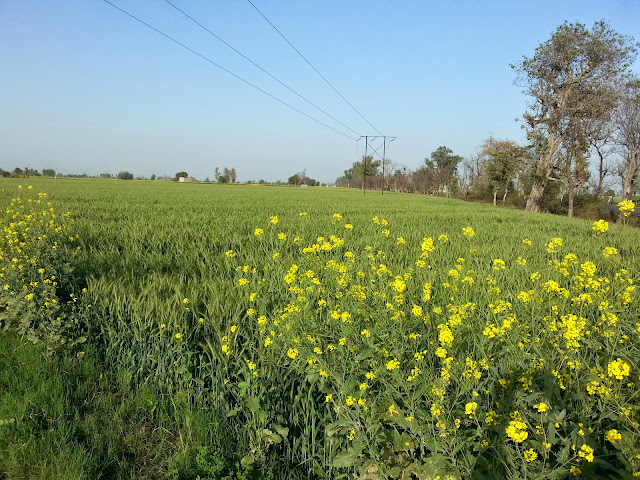
Punjab is Beautiful

Image

Lives, money saved by protocol-guided transfusion use at cardiac surgery

Statewide implementation of a protocol for   managing the intraoperative and postoperative use   of blood products with cardiac surgery not only cut down on   transfusion-related clinical risks, as would have been expected, it saved money . As a decision to use transfusions represents a trade-off between immediate benefit and certain inherent risks, the blood-product management plan put together by the   Virginia Cardiac Surgery Quality Initiative   (VCSQI) helped optimize the process and lowered the overall use of transfusions, cutting related mortality by half and saving about $50 million statewide over two years, reported   Dr Damien J LaPar   (University of Virginia, Charlottesville) here at the   American Association of Thoracic Surgery 2012 Annual Meeting . As the assigned discussant following LaPar's presentation,   Dr Edward D   Verrier   (University of Washington, Seattle) noted that the clinical...

Postprandial, but not fasting, glucose predicts CV risk in type 2 diabetes

Postprandial blood glucose levels, but not fasting blood glucose, predict cardiovascular events and all-cause mortality in people with type 2 diabetes, according to 14 years of follow-up in the   San Luigi Gonzaga Diabetes   Study . HbA 1c   was also a predictor of both outcomes over the long term, according to   Dr Franco   Cavalot   (University of Turin, Italy), who presented long-term follow-up data here at the   European Association for the Study of Diabetes (EASD) 2011 Meeting . Franco and colleagues reported five-year findings from this study back in 2006: at that time, postprandial blood glucose was predictive of CVD events after adjustment for HbA 1c   and other cardiovascular risk factors. The study included 505 patients with type 2 diabetes reporting for regular follow-up at the diabetes clinic. Patients underwent blood glucose tests at four time points: fasting, two hours after breakfast, two hours after lunch, and before dinner...

Shake It Off And Step Up

A parable is told of a farmer who owned an old mule. The mule fell into the farmer's well. The farmer heard the mule 'braying' - or - whatever mules do when they fall into wells. After carefully assessing the situation, the farmer sympathized with the mule, but decided that neither the mule nor the well was worth the trouble of saving. Instead, he called his neighbors together and told them what had happened...and enlisted them to help haul dirt to bury the old mule in the well and put him out of his misery.   Initially, the old mule was hysterical! But as the farmer and his neighbors continued shoveling and the dirt hit his back...a thought struck him. It suddenly dawned on him that every time a shovel load of dirt landed on his back...HE SHOULD SHAKE IT OFF AND STEP UP! This he did, blow after blow.   "Shake it off and step up...shake it off and step up...shake it off and step up!" he repeated to encourage himself. No matter how painful the blows, or d...

High marks for novel LVEF-boosting agent stir hope in heart failure

The heart-failure drug development field is so strewn with casualties that researchers tend to express caution rather than optimism when discussing new candidates. Hopes are stirring again, however, for an LVEF-boosting drug with mechanistic underpinnings and safety data suggesting it could be an effective, lower-risk alternative to conventional inotropic agents, and perhaps more. That potential was on display in two studies published in the August 20, 2011 issue of the  Lance t , phase-1 and -2 evaluations aimed at pinning down the most effective and best-tolerated IV dosage of the novel myosin-activator  omecamtiv mecarbil  (Cytokinetics, San Francisco, CA). In earlier research, the drug was identified as CK-1827452. Dr John R Teerlink  (San Francisco Veterans Affairs Medical Center, CA), lead author of one of the studies, acknowledges that the drug is still early in development but is impressed enough with its positive effect on cardiac output and apparent...
Novel agent reduces emboli after carotid endarterectomy

Inhibition of von Willebrand factor (vWF) activity with the investigational agent   ARC1779   (Archemix, Cambridge, MA) has been shown to reduce cerebral embolization after carotid endarterectomy in a   randomized trial. ARC1779 is an aptamer that inhibits the prothrombotic function of vWF by binding to the A1 domain of vWF, blocking its interaction with glycoprotein, the study authors, led by   Dr   Hugh S   Markus   (St Georges University of London, UK), write. "Our results show for the first time that vWF inhibition improves a clinically relevant end point, cerebral embolization in humans," Markus and colleagues conclude. "Further studies are now required to determine whether this treatment approach reduces clinical cardiovascular events and to assess the risk of bleeding complications in a nonoperative situation." The results are published in the August 2011 issue of   Stroke .  

Multivessel PCI during STEMI associated with higher short- and long-term mortality

Two new studies published this week confirm clinical recommendations that a deferred angioplasty strategy of nonculprit lesions should remain the standard interventional approach in patients with ST-segment elevation MI (STEMI) undergoing primary PCI. In the first study, an analysis of the   Harmonizing Outcomes with Revascularization and Stents in Acute Myocardial Infarction   (HORIZONS AMI) study, investigators, led by   Dr Ron Kornowski   (Tel Aviv University, Israel), observed significantly higher one-year mortality and stent-thrombosis rates among patients undergoing multivessel PCI compared with individuals undergoing staged PCI. In the second study, a meta-analysis that included 18 studies and more than 40 000 patients, the investigators report that multivessel PCI was associated with the highest rates of death in short- and long-term follow-up when compared with culprit-lesion PCI and staged PCI. Dr Pieter Vlaar   (University Medical Center,...